



Credential security depends on trustworthy issuance, appropriate proof checking and record maintenance. It should not be reduced to a blanket blockchain or encryption claim.
Separate record integrity from issuer authority
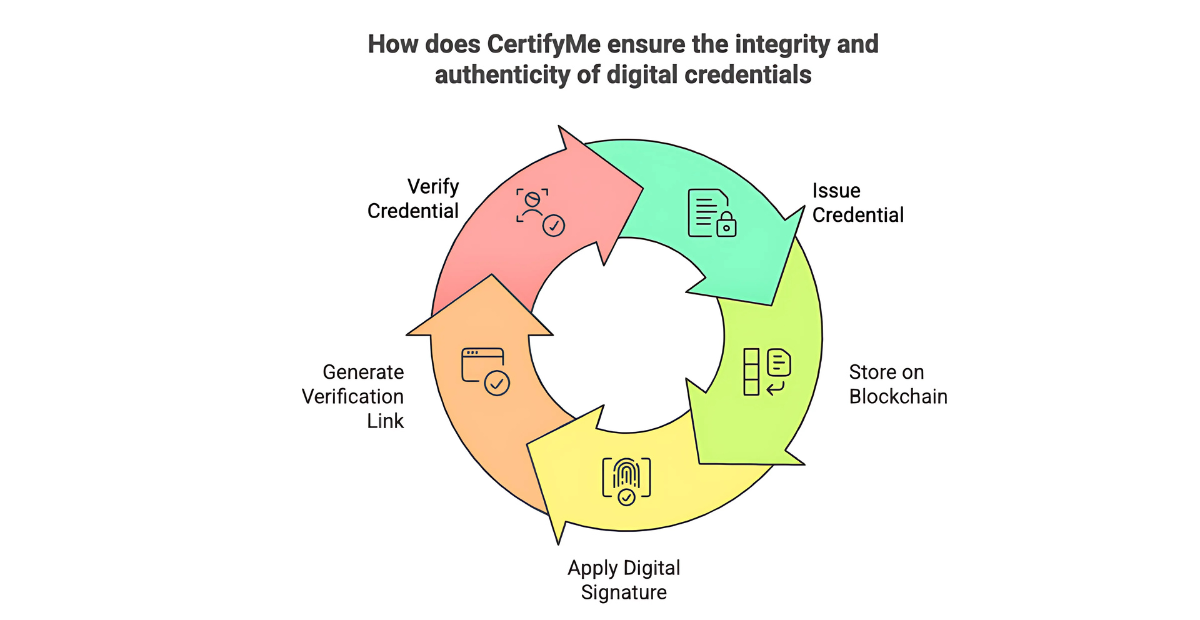
A supported proof mechanism can help detect changes to signed data. A verifier must also assess who issued the achievement and whether that issuer is authoritative for the use case. The W3C trust roles make this distinction explicit.
Separate credential proof from platform controls
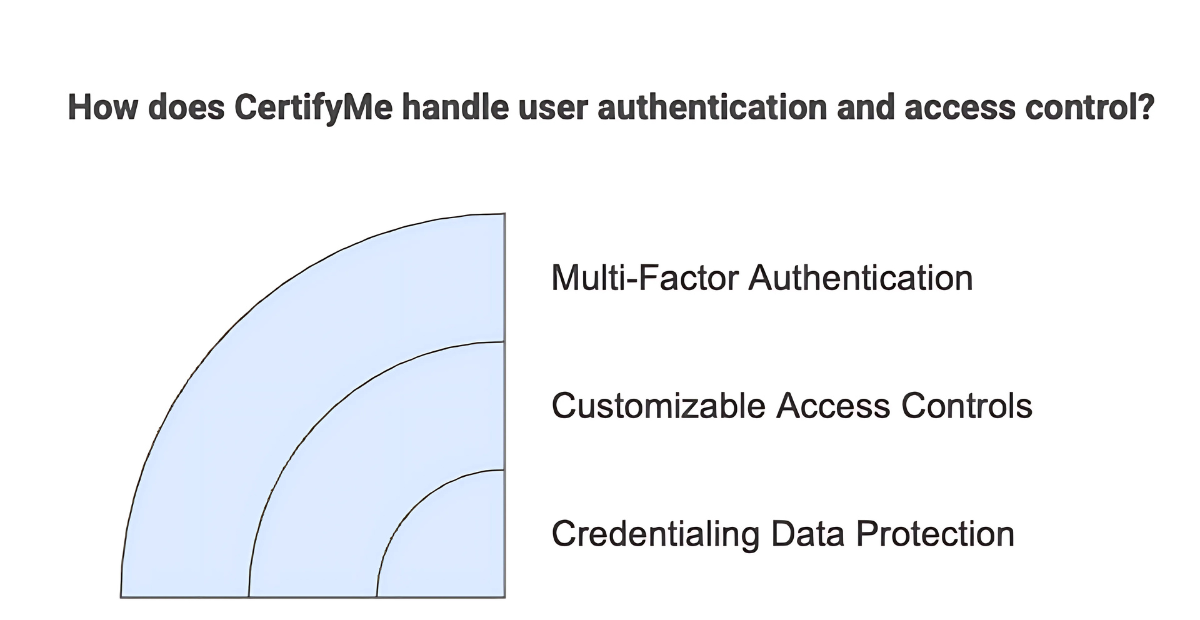
Authentication, permissions, monitoring and data protection govern the platform. A governed credential lifecycle determines approval, issuance and correction responsibilities. Neither control category replaces the other.
Describe standards accurately
Open Badges achievement credentials carry achievement information with an applicable proof mechanism. Do not infer that every credential is stored on a blockchain or that the format independently verifies real-world recipient identity.
Use the actual assurance scope
The security page describes approved SOC 2 Type II attestation wording, distinct ISO management-system purposes and enterprise authentication. A GDPR policy is not an independent GDPR certification; ISO quality and environmental scopes are not cybersecurity certifications.
Security aligned with institutional operations
Authentication, evidence access, record maintenance and continuity support institutional credential operations. Deployment and residency terms establish the agreed scope for storage, backups and support access.
Verification results with clear meaning
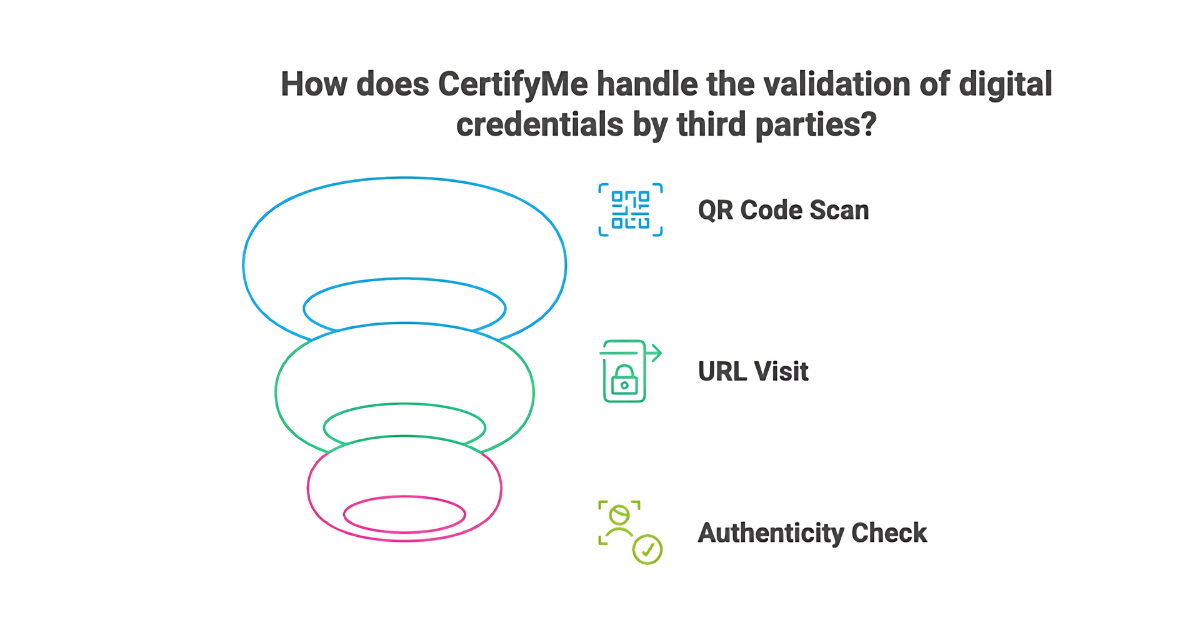
Supported proof checks can reveal changes to signed credential data. Verification also depends on available issuer and status resources; an unresolved resource remains an unresolved check. This gives receiving teams a meaningful result rather than treating every record as equally verified.
Plan your next step
Explore CertifyMe’s credential verification and enterprise security foundations for your institution. Request an institutional demo.
Frequently Asked Questions
Is blockchain required for all digital credentials?
No. Credential formats and securing mechanisms vary; inspect the actual supported implementation.
Does an attestation certify every feature or integration?
No. Use the documented examination and management-system scopes, and review feature-specific controls separately.