 Author :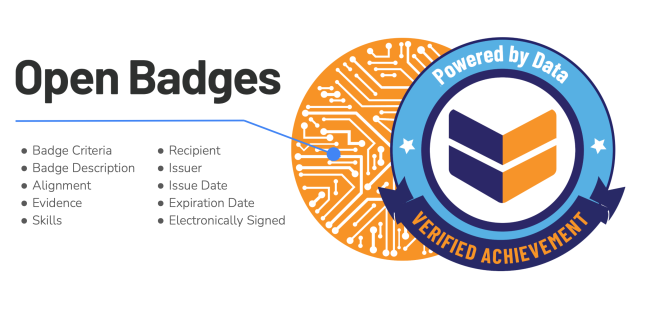
Educational institutions, universities, training centers, and professional certification bodies are rapidly moving toward digital credentialing. As employers and learners demand more transparent and verifiable proof of skills, the need for a trusted digital credential ecosystem has never been greater.
This is where Open Badges 3.0 standards become essential.
By adopting Open Badges 3.0, institutions can issue secure, portable, and globally recognized digital credentials that improve learner trust, increase employability, and modernize academic recognition systems.
In this blog, we explore why institutions should adopt Open Badges 3.0 standards, the benefits of digital credentials, and how the transition can strengthen long-term educational and workforce outcomes.
Enhanced Analysis: Why Institutions Should Embrace Open Badges 3.0 Standards
Educational institutions, universities, training providers, and professional certification bodies are increasingly transitioning toward digital credentialing systems. As employers and learners gravitate toward transparent, verifiable proof of competencies, the demand for a trusted digital credential ecosystem has intensified. Open Badges 3.0 standards emerge as a pivotal framework addressing these growing needs, offering institutions the tools to issue secure, portable, and globally recognized credentials that enhance learner trust, employability, and academic recognition mechanisms.
Detailed Overview of Open Badges 3.0 Standards
Open Badges 3.0 represents the latest iteration of the globally recognized open standard for digital badges and verifiable credentials. Developed under the auspices of the IMS Global Learning Consortium, this framework facilitates the issuance of credentials that are:
-
Cryptographically Secure and Tamper-Proof: Leveraging cryptographic signatures and decentralized identifiers (DIDs) to ensure authenticity and integrity.
-
Machine-Readable: Embedded metadata enables automated processing and integration with various platforms.
-
Easily Shareable: Credentials can be displayed across digital resumes, social profiles, and e-portfolios.
-
Interoperable: Designed to work seamlessly across learning management systems (LMS), credential wallets, and verification tools.
-
Verifiable: Third parties, including employers and academic institutions, can independently confirm the validity and attributes of each credential.
Unlike traditional paper certificates or static digital documents, Open Badges 3.0 credentials encapsulate detailed metadata, including:
-
The issuing institution’s identity
-
The recipient’s identity
-
Specific skills or competencies demonstrated
-
Date of issuance and expiration (if applicable)
-
Criteria for earning the credential
This comprehensive metadata structure fosters a trustworthy ecosystem for lifelong learning and credential verification.
Key Reasons for Adopting Open Badges 3.0
1. Enhanced Credential Trust and Verification Mechanisms
Credential fraud remains a significant challenge, with paper certificates and unsecured digital documents susceptible to forgery. Open Badges 3.0 mitigates this risk through cryptographic verification and adherence to W3C Verifiable Credentials data models. Each badge contains a digital signature that employers or other verifiers can authenticate instantly using public key infrastructure (PKI). This capability:
-
Safeguards institutional reputations by reducing fraudulent claims
-
Bolsters employer confidence in candidate qualifications
-
Strengthens the perceived value of issued credentials
2. Facilitation of Skills-Based Learning and Micro-Credentials
Contemporary educational paradigms increasingly emphasize skills and competencies over traditional degree-centric models. Open Badges 3.0 supports this shift by enabling institutions to issue:
-
Micro-credentials for specific skill acquisitions
-
Digital badges for course completions or modular achievements
-
Professional certifications aligned with industry requirements
-
Competency-based badges reflecting granular learning outcomes
This granular recognition allows learners to showcase a diverse skill set and provides institutions with flexibility in curriculum design and credentialing strategies.
3. Improvement of Graduate Employability
Students and learners prioritize credentials that enhance their career prospects. Open Badges 3.0 credentials can be seamlessly integrated into:
-
LinkedIn profiles
-
Digital resumes and e-portfolios
-
Job application systems
-
Professional networking platforms
The inclusion of verified skill data empowers employers to make informed hiring decisions based on demonstrated competencies, thereby improving alignment between education outcomes and workforce needs.
4. Interoperability Across Platforms and Systems
A foundational advantage of Open Badges 3.0 is its vendor-agnostic design. Institutions are not constrained to a single platform; credentials can traverse compatible systems, including:
-
Learning management systems (e.g., Moodle, Canvas)
-
Credential wallets (e.g Velocity, Accredible, CertifyMe, Credly etc)
-
Verification tools and employer portals
This interoperability:
-
Reduces dependency on specific technology vendors
-
Enhances long-term scalability and adaptability
-
Ensures learner ownership and portability of credentials
5. Alignment with Global Educational and Workforce Trends
Governments, educational consortia, and industry bodies worldwide are adopting verifiable credential standards to support:
-
Cross-border education and student mobility
-
Online and blended learning programs
-
Workforce development and upskilling initiatives
-
Professional licensing and regulatory compliance
Early adoption positions institutions as innovators in the digital education landscape, enhancing their global competitiveness.
6. Boost to Learner Engagement and Motivation
Empirical studies indicate that digital badges positively influence learner behavior by providing tangible, shareable recognition of achievements. Implementing Open Badges 3.0 can lead to:
-
Higher course completion and retention rates
-
Increased participation in voluntary training modules
-
Enhanced motivation through gamified learning pathways
These benefits are particularly pronounced in online and self-paced learning environments.
7. Reduction in Administrative Burden
Manual processes for issuing, verifying, and managing credentials are resource-intensive. Open Badges 3.0 automates:
-
Credential issuance and distribution
-
Verification requests and status checks
-
Record-keeping and audit trails
-
Integration with student information systems (SIS)
Automation minimizes administrative overhead while improving accuracy, scalability, and responsiveness.
Implementation Guidelines for Open Badges 3.0
Select Standards-Compliant Technology Partners
Ensure that credentialing platforms or tools support Open Badges 3.0 specifications and W3C Verifiable Credentials to guarantee interoperability and future-proofing.
Develop a Coherent Skills Framework
Map badges to specific, measurable competencies aligned with industry standards or frameworks (e.g., ESCO, O*NET) to enhance their relevance and utility.
Establish a Transparent Badge Taxonomy
Organize badges into logical pathways or collections that help learners and employers understand credential hierarchies and prerequisites.
Educate Stakeholders
Provide clear guidance to learners, faculty, and employers on how to earn, share, and verify digital badges, emphasizing their value and authenticity.
Integrate with Existing Infrastructure
Connect badge ecosystems with institutional systems such as LMS, SIS, and HR platforms to streamline workflows and data exchange.
Future Trajectory of Digital Credentials
The evolution of credentialing is increasingly oriented toward portable, learner-centric, and verifiable models. Open Badges 3.0 equips institutions to support:
-
Lifelong learning and continuous skill development
-
Global credential portability and recognition
-
Skills-based hiring practices
-
Decentralized digital identity ecosystems
Institutions that adopt these standards are better positioned to navigate the future landscape of education and employment.
Conclusion
Open Badges 3.0 is not merely a technical standard but a strategic enabler for modern credentialing ecosystems. Its adoption allows institutions to:
-
Enhance security and reduce credential fraud
-
Improve alignment with labor market needs
-
Support modular and skills-based education
-
Streamline administrative processes
-
Foster global interoperability and trust
As digital learning modalities proliferate, investment in open, interoperable credentialing systems will distinguish forward-thinking institutions.
Frequently Asked Questions (FAQ)
What distinguishes Open Badges 3.0 from previous versions?
Open Badges 3.0 incorporates W3C Verifiable Credentials standards, enhancing security, interoperability, and decentralization compared to earlier iterations.
How do Open Badges 3.0 credentials improve institutional credibility?
They provide cryptographically verifiable proof of achievements, reducing fraud and increasing trust among employers and educational partners.
Can Open Badges 3.0 be integrated with existing student information systems?
Yes, most modern SIS and LMS platforms support integration through APIs and standards-compliant middleware.
What role do employers play in the Open Badges 3.0 ecosystem?
Employers can verify credentials in real-time, seamlessly incorporating them into recruitment and talent management processes.
Are there cost implications for implementing Open Badges 3.0?
While initial setup may require investment in technology and training, long-term savings from automated processes and reduced fraud often offset these costs.